
Born in China, Volunteer Feels at Home in Nebraska
By Rodney Campbell (American Board of Radiology)
Despite growing up in a region of five million people in China, Chi Lin, MD, PhD, feels more at home in smaller communities with open spaces.
Dr. Lin earned her medical degree at Shanghai Medical College, Fudan University, and completed her PhD at Thomas Jefferson University and residency at Drexel University College of Medicine, both in Philadelphia. A chance encounter during her ABR Initial Certification process opened the door for her to escape big city life after she completed her training.
Weining (Ken) Zhen, MD, who was one of her radiation oncology oral examiners, gave Dr. Lin a tip about a job possibility at the University of Nebraska Medical Center (UNMC) in Omaha after she earned board certification. It turned out to be a perfect fit.
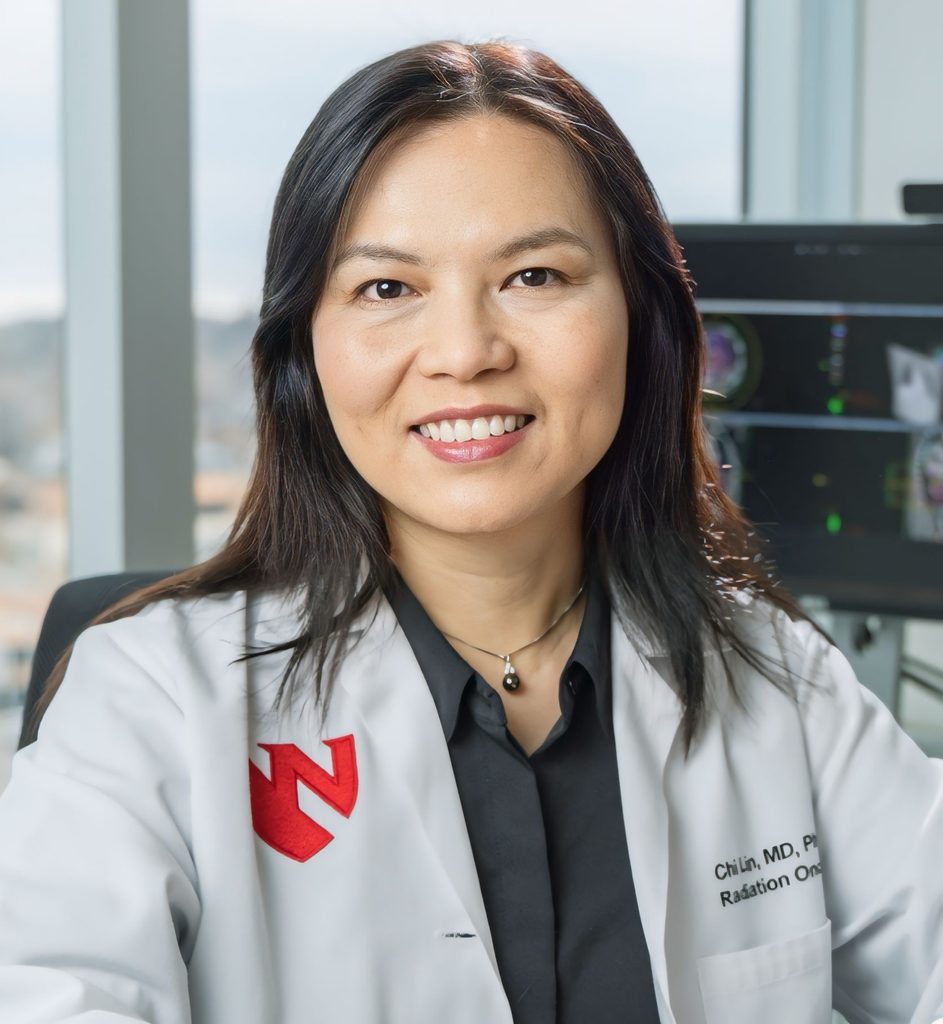
“They had a faculty opening,” she said. “Dr. Zhen worked here and remembered me. He asked if I wanted to join the team and I decided to take a look and loved it here.”
While the Omaha region has a million residents, that’s small compared with Philadelphia, where more than six million people live.
“Everybody squeezes into little spaces,” Dr. Lin said.
She started her job in 2006 with the thought of remaining open to anything. Staying in Omaha or packing up and leaving were equal possibilities.
“(Omaha) immediately attracted me, but I didn’t think I was going to be here this long,” Dr. Lin said. “I thought I would just stay a while and if I didn’t like it, I would go somewhere else. I can’t believe I’ve been here 20 years.”
Now a professor and vice chair of research at UNMC, Dr. Lin also volunteers with the ABR. The opportunity arose when Patricia Hardenbergh, MD, who’s also a volunteer, approached her at a conference.
Dr. Lin started as a question writer for the Radiation Oncology Oral Certifying Exam. After encouragement from Dr. Zhen, she expanded her duties to include being an oral examiner.
“He showed me that an examiner’s responsibility extends beyond just caring for our patients,” Dr. Lin said. “Being an examiner helps prepare the next generation of physicians. Serving as an examiner felt like a meaningful way to give back.”
Every resident has a different experience when they’re pursuing Initial Certification. Dr. Lin believes that oral examiners need to recognize those differences while remaining “prepared, consistent, attentive, and fair.”
“It’s important to listen carefully and assess the candidate’s clinical reasoning without letting personal practice preferences influence your assessment,” she said. “I try to evaluate them with a standard of care. That’s very important.”
Dr. Lin believes that being an oral examiner helps her work with residents at her institution.
“I think I’m a better teacher because I always encourage my residents to be more vocal,” she said. “When you know what you want to do with a patient, try to say it. Don’t just write notes or something. You have to practice explaining your reasoning aloud and be ready to tell how you applied it to a patient.”
As a middle school student in China, Dr. Lin was interested in math. She eventually merged that interest with a desire to help people and now balances her time between research and clinical duties.
“I wanted to integrate math into a physician’s life,” she said. “But my main goal was taking care of patients.”
Her research, which she conducts at night and on weekends, focuses on clinical trials testing the effects of combining radiation with novel radiosensitizers or radioprotectors to treat cancer.
“I do research because I love it,” Dr. Lin said. “You have to be motivated to do research when you have a full clinical load.”
Dr. Zhen is thankful that he connected with Dr. Lin early in her career. A professor and vice chair of departmental affairs in the department of radiation oncology at UNMC, he admires his colleague’s ability to make everyone around her better.
“Dr. Lin brings remarkable passion, energy, and dedication to everything she does, whether caring for patients, advancing research, or mentoring trainees and colleagues,” he said. “Her leadership, enthusiasm, and commitment to excellence have elevated our department and positively influenced countless students, residents, faculty, and patients. She is truly an exceptional colleague whose impact extends far beyond her accomplishments.”
英译中:
出生于中国的志愿者在内布拉斯加州找到了家的感觉
美国放射学委员会(ABR)志愿者林医生的故事
By Rodney Campbell (美国放射学委员会)
Chi Lin (林琦)医生在中国一个拥有约五百万人口的地区长大,却发现,在人口较少、环境开阔的地方生活,更让她有家的感觉。
林医生在复旦大学上海医学院获得医学学位,随后在费城的托马斯·杰斐逊大学取得博士学位,并在同城的德雷塞尔大学医学院完成住院医师培训。在参加美国放射学委员会(ABR)初次专科认证的过程中,一次偶然的相遇,让她在培训结束后有机会告别大城市生活。
Weining(Ken)Zhen (甄维宁)医生曾是她的放射肿瘤学口试考官之一。林医生取得专科认证后,他告诉她,位于奥马哈的内布拉斯加大学医学中心(UNMC)可能有一个适合她的职位。事实证明,这份工作再合适不过。
“当时他们有一个教职空缺,”她说,“甄医生就在这里工作,还记得我。他问我愿不愿意加入他们的团队,我就决定来看看,结果一下子就喜欢上了这里。”
奥马哈地区约有一百万人口,与拥有六百多万人口的费城相比,规模要小得多。
“大家都挤在小小的空间里,”林医生说。
2006 年,林医生开始了这份工作。当时她对未来并未设限,既可能留在奥马哈,也可能收拾行李去别处。
“奥马哈一下子就吸引了我,但我没想到会在这里待这么久,”林医生说,“我原本想先待一阵子,如果不喜欢,就去别的地方。真没想到,一转眼已经二十年了。”
如今,林医生是内布拉斯加大学医学中心的教授,也是分管科研的副主任,同时还担任 ABR 志愿者。这段志愿服务经历始于一次会议。同为 ABR 志愿者的 Patricia Hardenbergh 医生在会上主动找到她,和她谈起了这个机会。
林医生最初为放射肿瘤学专科认证口试编写试题。在甄医生的鼓励下,她后来也担任了口试考官。
“他让我明白,作为医生,除了照顾好自己的患者,我们还可以承担更多责任,”林医生说,“担任考官,可以为培养下一代医生出一份力。对我来说,这是一种很有意义的回馈方式。”
每位住院医师在争取获得初次专科认证的过程中,经历各不相同。林医生认为,口试考官既要理解这些差异,也要“准备充分、尺度一致、认真倾听、公平评判”。
“重要的是认真听考生怎么说,评估他们的临床推理,避免让自己的诊疗偏好影响判断,”她说,“我尽量以公认的诊疗标准来评估他们。这一点非常重要。”
林医生认为,担任口试考官的经历也让她在指导本院住院医师时有所受益。
“我觉得自己成了更好的老师,因为我总是鼓励住院医师多开口,把自己的想法说出来,”她说,“当你想好了怎么诊治一位患者,就试着把你的方案说出来。别只写在病历里。你要练习把自己的思路讲清楚,也要能说明,你是怎样把这个思路用到这位患者身上的。”
在中国读中学时,林医生就对数学感兴趣。后来,她把对数学的兴趣和帮助他人的愿望结合起来。如今,她兼顾科研与临床工作。
“我希望把数学用到医生的日常工作中,”她说,“而我最主要的目标,始终是照顾好患者。”
她利用晚上和周末开展研究,主要通过临床试验评估放疗联合新型放射增敏剂或放射防护剂用于癌症治疗的效果。
“我做研究,是因为我喜欢,”林医生说,“临床工作已经排得满满的,还要抽时间做研究,就得有足够的动力。”
甄医生说:很庆幸,在林医生职业生涯刚起步时就认识了她。他也是内布拉斯加大学医学中心放射肿瘤科的教授,担任分管科室事务的副主任。他尤其欣赏这位同事的一点:她能让身边每个人都变得更好。
“无论是照顾患者、推进研究,还是指导学员和同事,林医生都以非凡的热情、充沛的精力和高度的投入去做好每一件事,”他说,“她的领导力、热忱和对卓越的追求,提升了我们整个科室的水平,也给无数学生、住院医师、教师和患者带来了积极影响。她是一位真正出色的同事,她对他人的影响,远远超出了她个人所取得的成就。”
PS:
Origial Link: https://www.theabr.org/blogs/born-in-china-volunteer-feels-at-home-in-n…
林琦: 78届
添加新评论